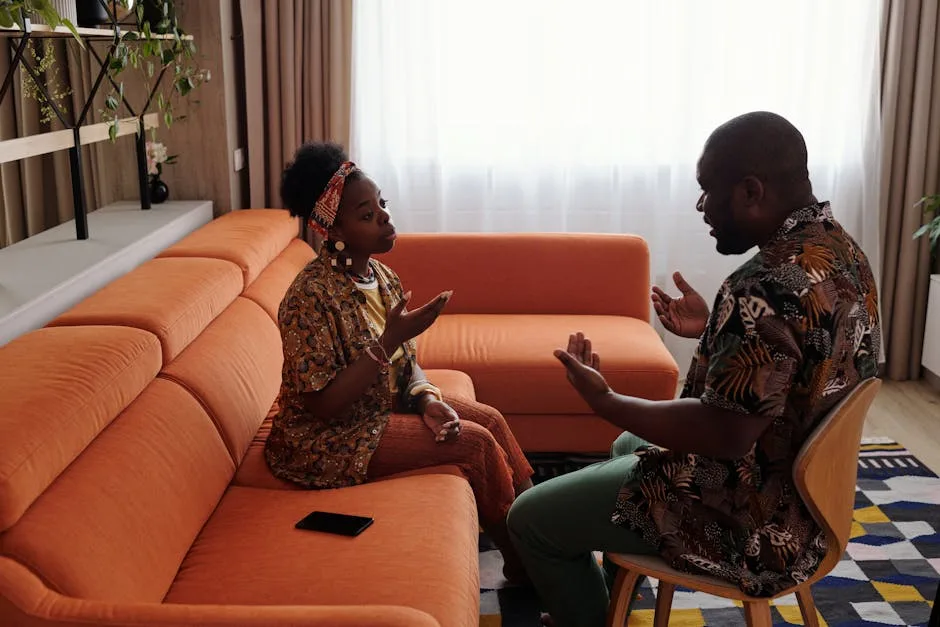
- ADHD affects about 4.4% of U.S. adults. It causes specific communication problems like interrupting, time blindness, and emotional dysregulation. These create predictable relationship challenges.
- The “parent-child dynamic” is one of the most damaging patterns. This happens when non-ADHD partners become managers. But you can prevent it with intentional communication strategies.
- Couples who understand ADHD-specific communication needs see big improvements. They get 60% better relationship satisfaction within 12 months of diagnosis and treatment.
Let’s be honest: ADHD and relationships: navigating communication challenges isn’t exactly romantic. But for millions of adults with ADHD and their partners, it’s one of the most critical conversations they’ll ever have.
I’ve watched countless relationships struggle. Not because people don’t care about each other. But because nobody explained that ADHD brains communicate differently.
When you don’t know what you’re dealing with, it’s easy to make mistakes. You might think neurological differences are character flaws.
The thing is, communication challenges in ADHD relationships follow predictable patterns. Once you understand these patterns, they become manageable. Sometimes even fixable.
Why ADHD Makes Communication Feel Like Speaking Different Languages
Here’s what’s actually happening in the brain. ADHD affects executive function. That’s the mental processes that help you plan, focus, remember, and regulate emotions.
These are the exact same processes you need for effective communication.
Your partner’s telling you about their day. Your mind suddenly wanders to whether you paid the electric bill. That’s not rudeness. That’s your brain’s attention regulation system misfiring.
You forget an important conversation you had just yesterday. It’s not that you don’t care. It’s working memory challenges. These affect up to 90% of adults with ADHD.
The National Institute of Mental Health reports that about 4.4% of U.S. adults have ADHD. Many cases go undiagnosed until relationship difficulties prompt evaluation.
Here’s the kicker: adults with ADHD are 2-3 times more likely to report chronic relationship conflicts. These conflicts are specifically related to communication issues. Things like interrupting, not listening, and forgetting commitments.
The Interrupting Problem (and Why It Happens)
Probably the most common complaint? “They never let me finish a sentence.”
ADHD brains process thoughts quickly and impulsively. When an idea appears, there’s often an overwhelming urge to express it right now. Before it disappears into the void.
It’s not that the person doesn’t value what you’re saying. They’re genuinely afraid they’ll lose their thought if they wait.
Non-ADHD partners experience this as disrespectful. The ADHD partner experiences it as barely hanging onto their train of thought.
Both feelings are valid. That’s exactly why this needs conscious strategy rather than just “trying harder.”
Time Blindness and the Trust Erosion Cycle
Then there’s time blindness. The ADHD brain has a notoriously poor sense of time passage.
Someone with ADHD says “I’ll be there in five minutes.” They show up 25 minutes later. Their partner interprets it as lying or not caring.
But the ADHD person genuinely believed they’d be five minutes.
This creates a trust erosion cycle that’s particularly insidious. The non-ADHD partner starts to doubt everything. The ADHD partner feels constantly criticized and misunderstood.
Neither person is wrong about their experience. But both are suffering.
The Parent-Child Dynamic (And How It Destroys Romance)
Want to know the relationship pattern that sends couples to therapy most often? It’s what therapists call the “parent-child dynamic.”
It’s devastatingly common in relationships where one partner has ADHD.
Here’s how it develops: The non-ADHD partner starts managing things. Reminders about appointments. Taking over all the planning. Checking that things got done.
They’re usually trying to be helpful at first. They’re compensating for executive function challenges.
But over time, this helpful compensation morphs into something toxic. The managing partner becomes resentful. They feel more like a parent than a romantic equal.
The ADHD partner feels infantilized and criticized. Even when reminders are delivered kindly.
Sexual and romantic attraction often tanks. Nobody wants to have sex with someone who feels like their parent.
According to CHADD (Children and Adults with Attention-Deficit/Hyperactivity Disorder), this pattern is one of the most reported issues in ADHD relationships. And it’s entirely preventable with the right systems.
The key is creating external structures. Apps, calendars, written communication. Rather than making one partner into a human reminder system.
Emotional Dysregulation: When Small Things Feel Catastrophic
If you want to understand ADHD relationships, you have to talk about emotional dysregulation.
Up to 70% of adults with ADHD experience difficulty regulating emotional responses. This shows up intensely during conflicts.
A particularly painful manifestation is rejection sensitive dysphoria (RSD). That’s an extreme emotional response to perceived rejection or criticism.
A partner with RSD hears “You forgot to pick up milk again.” Their brain might interpret it as “You’re fundamentally inadequate and I regret being with you.”
The 2026 American Journal of Psychiatry published research showing that RSD contributes to disproportionate reactions during conflicts. ADHD individuals often shut down completely. Or they respond with intense defensiveness to feedback their partners intended as minor.
For non-ADHD partners, this can feel like walking on eggshells. For ADHD partners, it feels like constant emotional flooding.
Both people need different strategies. The ADHD partner needs to recognize when RSD is activating. Sometimes with help from management techniques that work in other life areas.
The non-ADHD partner needs to understand they’re not responsible for managing their partner’s nervous system.
The Hyperfocus Paradox That Confuses Everyone
Here’s something that genuinely baffles non-ADHD partners: the hyperfocus paradox.
Your partner can spend six hours straight building a model airplane. Or researching obscure historical events. But they can’t maintain attention for a 15-minute conversation about household responsibilities?
How does that make sense?
The Couples Therapy Research Institute documented this phenomenon extensively in 2025. The confusion is understandable. But it’s based on a misunderstanding of how ADHD attention actually works.
ADHD isn’t an attention deficit. It’s attention dysregulation. The brain can’t consistently direct attention where it needs to go.
High-interest activities trigger dopamine release. This temporarily normalizes attention regulation. But conversations about mundane topics don’t provide that neurochemical boost. Even if they’re important.
It’s not about caring more about hobbies than relationships. It’s about how the ADHD brain’s reward system works.
Understanding this doesn’t make the frustration disappear. But it changes the conversation. From “You don’t care about me” to “We need strategies that work with your brain, not against it.”
Communication Strategies That Actually Work
Okay, enough problems. Let’s talk solutions.
Because the good news—and there is good news—is that ADHD communication challenges respond really well to specific strategies.
The Write-It-Down Rule
If it’s important, write it down. Not as a maybe, but as a non-negotiable communication rule.
Text it, email it, put it in a shared calendar. Verbal-only communication is setting up for failure when working memory challenges are in play.
This isn’t about not trusting your partner’s memory. It’s about creating external support systems that work with ADHD neurology rather than against it.
Many couples report that this single change eliminates 50% of their recurring conflicts.
Designated Talk Times for Important Conversations
Don’t try to have important conversations whenever the mood strikes. Schedule them. Give advance notice.
Make sure the ADHD partner is medicated if they take medication. ADHD medications significantly improve attention regulation.
This might feel unromantic. But what’s actually unromantic is having the same frustrated conversation over and over.
Don’t try to discuss vacation plans while your partner was transitioning between tasks and couldn’t fully engage.
The Interrupting Signal System
Create a gentle, non-verbal signal for “you’re interrupting.” Maybe a raised finger. Maybe a specific hand gesture.
This gives immediate feedback without derailing the conversation or creating defensiveness.
The ADHD partner needs to work on pausing before speaking. Sometimes with help from properly adjusted medication.
But the non-ADHD partner also needs to build in more pauses. ADHD brains often need explicit permission to speak. They won’t always naturally identify conversational openings.
Body Doubling for Difficult Tasks
When something important needs discussing or doing, do it together. The presence of another person helps ADHD brains maintain focus and follow-through.
This is called body doubling. And it’s wildly effective.
Paying bills together. Meal planning side-by-side. Even just being in the same room while you each handle separate tasks. These reduce the executive function load considerably.
When Professional Help Makes the Difference
Sometimes DIY strategies aren’t enough. And that’s okay.
The Journal of Marital and Family Therapy published research in 2026. Couples where ADHD is diagnosed and treated show 60% improvement in relationship satisfaction scores within 12 months.
That’s huge. But the key word is “treated.”
Treatment might mean medication, therapy, coaching, or usually some combination. What matters is that both partners understand they’re dealing with a neurodevelopmental condition. Not a character flaw or relationship failure.
Finding ADHD-Specialized Couples Therapists
Not all couples therapists understand ADHD. Actually, many don’t.
You want someone who specializes in neurodevelopmental differences. Someone who won’t default to generic communication advice that doesn’t account for executive function challenges.
The good news? Telehealth expansion in 2026 has made ADHD-specialized couples therapy much more accessible.
Insurance coverage has improved significantly. And you’re no longer limited to whatever’s available in your immediate geographic area.
The Medication Conversation
For many adults with ADHD, medication significantly improves communication abilities. Better attention regulation. Reduced impulsivity. Improved working memory.
These all directly impact relationship interactions.
But medication isn’t a magic fix for relationship patterns that have developed over years. It’s a tool that makes other strategies more effective.
Some people need extended-release medication to maintain consistent communication abilities throughout the day. Others prefer shorter-acting options.
And yes, there’s an adjustment period. Managing side effects is part of the process. It’s worth discussing how medication timing affects relationship interactions.
What the Research Says About Long-Term Outcomes
Look, I’m not going to sugarcoat it: ADHD does make relationships harder. The statistics on divorce rates are higher. The reports of chronic conflict are real.
But here’s the part that matters: when ADHD is recognized, understood, and accommodated, outcomes improve dramatically.
The difference isn’t the ADHD itself. It’s whether couples have the knowledge and tools to work with it.
Research from Psychology Today in 2025 found something important. Relationships where both partners learn ADHD-specific communication strategies report significantly lower conflict frequency.
Not zero conflict. That’s unrealistic for any relationship. But manageable, productive conflict rather than the same frustrating loops.
New Tools on the Horizon
The landscape is changing fast. FDA-cleared digital therapeutic apps specifically for ADHD couples communication launched in late 2025.
Early clinical trials are showing promising results. These apps include gamified reminder systems. Conflict de-escalation prompts. And structured communication frameworks.
The DSM-6 working group is scheduled for 2028 release. They’re considering adding “relationship and communication impairment” as a more explicit diagnostic criterion.
This would validate what millions of couples already know from experience. And it would potentially improve access to specialized treatment.
For the Non-ADHD Partners Reading This
A quick word specifically for you. Because I know you’re probably exhausted.
Your frustration is valid. The mental load is real. You’re not wrong to feel hurt when your partner forgets important things or zones out during conversations.
Those feelings make sense.
But your partner’s struggles are also real and neurological. They’re not choosing to forget. They’re not trying to hurt you.
Their brain literally processes information, time, and attention differently than yours does.
The solution isn’t for you to become a martyr who manages everything. It’s also not for you to just accept dysfunction.
It’s to build systems together that work for both of your brains. Systems that don’t require you to be a human reminder app. But also don’t require your partner to somehow override their neurology through willpower.
You both deserve better than the dynamic you’ve probably fallen into. And better is possible.
Final Thoughts
ADHD and relationship communication challenges are real. They’re predictable. And—here’s the important part—they’re manageable.
The couples who struggle most are usually the ones who don’t know they’re dealing with ADHD. Or who know but don’t have effective strategies.
The couples who thrive are the ones who stop trying to force neurotypical communication patterns. Instead, they build systems that work with ADHD neurology.
If you’re reading this and recognizing your relationship, start with one thing. Have an honest conversation about what you’ve learned here.
Not during a fight. Not when you’re already frustrated. But during a calm moment when you can both approach this as a team facing a challenge together rather than adversaries.
Consider whether an ADHD evaluation might be helpful if one hasn’t happened yet. Look into couples therapy with someone who actually understands ADHD.
And remember: relationship struggles don’t mean you’ve failed or chosen the wrong person. Sometimes they just mean you need better tools for the brain you’re actually working with.
Sources & Further Reading
- National Institute of Mental Health — Comprehensive ADHD statistics and prevalence data for U.S. adults
- CHADD (Children and Adults with Attention-Deficit/Hyperactivity Disorder) — Resources on relationships and social skills for adults with ADHD
- American Psychiatric Association — Patient and family information about ADHD diagnosis and treatment
- American Association for Marriage and Family Therapy — Guidance on ADHD and relationship dynamics
- Journal of Attention Disorders (via NIH Archives) — Peer-reviewed research on ADHD communication patterns and relationship outcomes