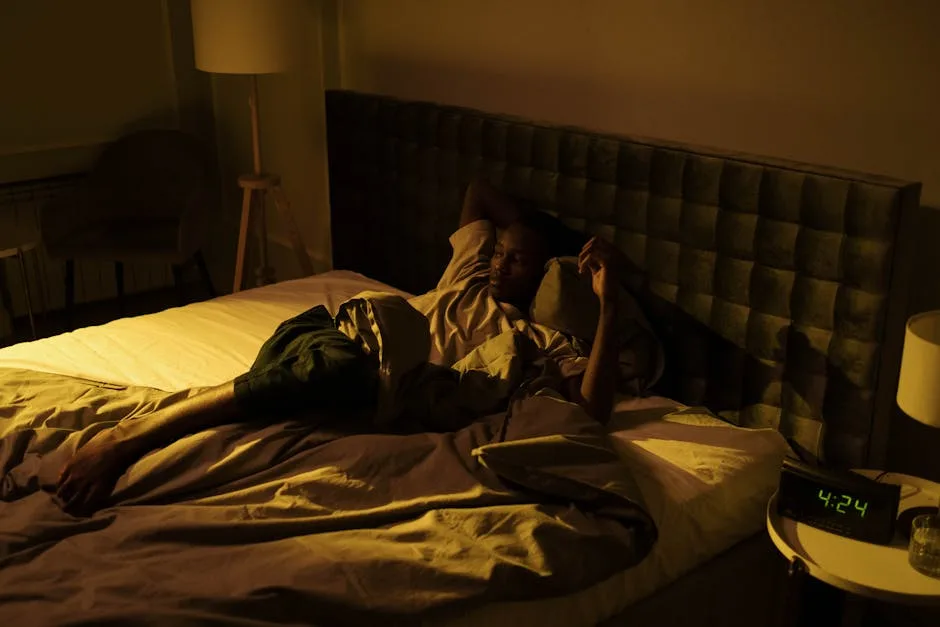
- About 70-80% of adults with ADHD have ongoing sleep problems. Poor sleep makes ADHD worse. And ADHD makes it harder to sleep well.
- ADHD brains have delayed sleep clocks. Melatonin starts 1.5 hours later than in other adults. The brain’s “sleep switch” is also less active.
- Things that help include taking medication at the right time, changing sleep habits for ADHD, weighted blankets, and special sleep therapy for ADHD adults.
If you have ADHD, you’ve probably spent many nights staring at the ceiling. Your brain won’t stop running. It plays every embarrassing moment from third grade onward.
The connection between ADHD and Sleep: Breaking the Insomnia Cycle (2026) is now heavily researched. There’s a good reason for this.
When I first learned my nighttime struggles weren’t just “bad habits,” it helped. I found out it was part of my ADHD brain. This was both validating and frustrating.
Validating because it wasn’t my fault. Frustrating because I couldn’t just “try harder” to fall asleep.
The cycle is harsh. ADHD symptoms make it hard to sleep. Poor sleep makes ADHD symptoms worse. Round and round it goes.
But here’s the good news. There are real strategies that work for ADHD brains. They’re based on evidence. Let’s look at the questions you’re probably asking at 2 AM.
Why Is Sleep So Much Harder With ADHD?
Your ADHD brain works differently when it comes to sleep. Research from 2025 shows something important. Adults with ADHD have delayed body clocks.
Your internal clock runs about 1.5 hours behind schedule. This is compared to people without ADHD.
When everyone else gets sleepy around 10 PM, your brain is still wide awake. It’s still in afternoon mode.
But there’s more to it than timing. There’s a part of your brain called the ventrolateral preoptic nucleus (VLPO). Think of it as your brain’s sleep switch.
This switch shows less activity in people with ADHD. It’s like having a dimmer switch that doesn’t dim all the way. Your wake-up system stays more active than it should.
This makes going from awake to asleep very hard. It feels like trying to merge onto a highway from a dead stop.
Then there’s the mental activity. Even if your body is tired, your mind keeps spinning.
You’re thinking about tomorrow’s meeting. You remember you forgot to answer that email from three days ago. You wonder if your friend was mad about that text.
You’re planning a road trip that might never happen. And composing the perfect comeback to an argument from 2019. All at the same time.
About 70-80% of adults with ADHD deal with ongoing sleep problems. You’re not alone in this.
Does My ADHD Medication Help or Hurt My Sleep?
This is probably the most confusing part of ADHD medication management.
The answer is: it depends. Sometimes both.
Here’s what new research from 2026 shows. Stimulant medications actually improve sleep for 40-50% of people. But only when taken earlier in the day.
Sounds backward, right? But it makes sense when you think about it.
Those racing thoughts keep you awake. So does physical restlessness. Medication quiets them down.
When your ADHD symptoms are better controlled during the day, you don’t carry that mental chaos into bedtime.
The catch is timing. Taking stimulants too late definitely can mess with sleep.
Most psychiatrists give this advice. Take immediate-release stimulants no later than early afternoon. Take extended-release formulas in the morning.
If you’re taking Adderall XR versus IR, the timing is very different.
Some people find something surprising. A small dose of stimulant medication in late afternoon actually helps them wind down.
It keeps them focused enough to complete their evening routine. Instead of getting distracted and doom-scrolling until 2 AM.
This is something to discuss carefully with your doctor. It’s very individual.
Non-stimulant medications like atomoxetine or guanfacine have different effects on sleep. Some people find them sedating. That can be helpful. Others don’t notice a difference.
If you’re struggling with sleep, talk to your doctor first. Review your medication timing and dosage.
Is This ADHD or Anxiety Keeping Me Awake?
Real talk: probably both. And they feed each other.
The racing thoughts of ADHD and anxiety look similar at 11 PM. But they have different flavors.
ADHD racing thoughts tend to be scattered. You jump from topic to topic without much connection.
One minute you’re thinking about breakfast. Then you’re mentally redecorating your bedroom. Then you’re wondering if penguins have knees.
It’s random and all over the place.
Anxiety-driven insomnia is more focused. It goes in cycles. You worry about specific things. You run through worst-case scenarios.
You replay conversations. You analyze what you “should have” said. The thoughts have weight. They have emotional charge.
Many adults with ADHD also have anxiety. About 50% actually. So you might be dealing with both at once. Which is extra fun.
The good news is that treating ADHD symptoms often reduces anxiety. A lot of ADHD-related anxiety comes from constantly managing symptoms. And trying to make up for executive dysfunction.
If you’re unsure which is causing your sleep problems, track patterns. This helps.
Do your racing thoughts have themes and worries? Or are they just everywhere?
Do relaxation techniques help at all? Or does your mind just keep going regardless?
This information is valuable for your healthcare provider.
What Sleep Hygiene Actually Works for ADHD Brains?
Standard sleep hygiene advice is designed for typical brains. And honestly? A lot of it doesn’t work for us. Or it needs big changes.
“Go to bed at the same time every night” sounds great. Until you factor in ADHD time blindness and delayed body clocks.
A more realistic approach: aim for a consistent wake-up time first. Your body will eventually adjust bedtime on its own.
And yes, this means setting about 47 alarms.
“Wind down for 30 minutes before bed” assumes you can remember to start winding down. It also assumes you won’t get hyperfocused on something else.
Build in environmental cues. Set a phone alarm labeled “START BEDTIME ROUTINE” an hour before you want to be asleep.
Use smart lights that automatically dim. Make it obvious.
Recent research from 2026 on weighted blankets shows they’re particularly effective for ADHD adults.
They reduce time to fall asleep by an average of 28 minutes. This works best when combined with “body doubling” audio. That means podcasts, audiobooks, or ASMR.
These provide a gentle focal point for your attention. The deep pressure from the blanket helps regulate the sensory system.
Blue light management is crucial. Adults with ADHD experience 33% greater melatonin suppression from blue light. This is compared to people without ADHD.
But telling someone with ADHD to “just don’t use your phone before bed” doesn’t work. That’s like telling someone to “just breathe underwater.”
More practical: use blue light filters. Switch to warmer lighting after dinner. If you must scroll, use apps with dark modes. Turn down the brightness.
Temperature matters more than you think. ADHD individuals often have sensory sensitivities.
Most people sleep best in cool rooms (65-68°F). But you might need to experiment.
Some people with ADHD need weighted blankets plus cooling. Others need warmth to feel secure enough to relax.
What About Sleep Supplements and Melatonin?
Melatonin is tricky with ADHD. Your circadian rhythm is already delayed. So taking melatonin at the “normal” time might not do much.
The key is timing it to match when your body naturally wants to sleep. That’s probably later than you think.
In March 2026, the FDA approved Circadin XR. It’s an extended-release melatonin made specifically for ADHD-related circadian rhythm disorders.
Clinical trials showed 58% improvement in time to fall asleep. It releases melatonin gradually over several hours. Not all at once. This better mimics natural melatonin production.
For over-the-counter melatonin, less is often more. Studies suggest 0.5-1 mg is best. Take it 2-3 hours before desired bedtime.
This is more effective than the 5-10 mg doses commonly sold. Higher doses can actually cause grogginess. And next-day fatigue.
Other supplements show promise for ADHD-related sleep issues. These include magnesium glycinate. It also helps with restless leg syndrome, which is common in ADHD.
L-theanine helps reduce mental chatter. Glycine improves sleep quality.
But supplements aren’t magic. They work best alongside other behavioral changes.
Important: always discuss supplements with your doctor. Especially if you’re taking ADHD medication.
Some combinations can cause interactions or side effects. You don’t want to discover these at 3 AM.
When Should I Worry It’s More Than Just ADHD?
ADHD rarely travels alone. About 35% of adults with ADHD also have sleep apnea. That’s a much higher rate than the general population.
The updated 2026 guidelines from the American Academy of Sleep Medicine now recommend sleep studies. They suggest this for all newly diagnosed ADHD adults.
Warning signs you might have sleep apnea: you snore loudly. You wake up gasping. You experience morning headaches.
You feel exhausted no matter how many hours you sleep.
Sleep apnea doesn’t just make you tired. It can worsen ADHD symptoms. It can also reduce medication effectiveness.
Restless leg syndrome (RLS) is also common with ADHD. That irresistible urge to move your legs when you’re trying to fall asleep? That’s RLS. Not just restlessness.
Iron deficiency often contributes to this. It’s worth getting your ferritin levels checked.
Delayed sleep phase disorder (DSPD) is when your circadian rhythm is so delayed that you can’t fall asleep until very late. Usually 2-4 AM.
You struggle immensely to wake up at conventional times. This is common enough in ADHD that it’s almost a feature. Not a separate disorder.
If this describes you, chronotherapy might help. That means gradually shifting your sleep schedule. Morning light therapy might also help more than traditional insomnia treatments.
If you’ve tried multiple strategies for several months without improvement, it’s time to see a specialist. Also if your sleep problems significantly impact your daily functioning.
Not all sleep problems are fixable with better sleep habits. Sometimes you need medical intervention.
How Do I Actually Build a Bedtime Routine That Sticks?
The ADHD brain struggles with routines in general. Bedtime routines are particularly challenging. You’re tired and your executive function is depleted.
Here’s what actually works:
Keep it stupidly simple. Not a 12-step skincare routine and meditation practice.
More like: bathroom, pajamas, bed. Three steps.
You can build from there once it becomes automatic. But start minimal.
Use external structure aggressively. Put checklists on your bathroom mirror. Set alarms with specific labels.
Place physical objects strategically. Like putting your phone charger in the bedroom. So you have to walk there to plug it in. This triggers the routine.
The “ADHD Sleep Protocol” app launched in 2026. It uses AI to create personalized reminders. Based on your patterns and medication schedule.
The “brain dump” technique helps many people. Keep a notebook by your bed.
When your brain starts spinning about all the things you need to do tomorrow, write them down.
Not to process or organize. Just to get them out of your head. Tell your brain, “Thanks, I’ve got it recorded. We can stop thinking about it now.”
Some people benefit from a “worry window” earlier in the evening. Set aside 15 minutes around 7 or 8 PM.
Use this time to deliberately think through concerns and make plans. This reduces the likelihood of your brain ambushing you with these thoughts at midnight.
Body doubling works for sleep too. Some people find that gentle background audio helps.
This could be podcasts about topics that are interesting but not too engaging. Or audiobooks you’ve heard before. Or ADHD-specific sleep content.
This gives their mind something to loosely follow. Instead of generating its own content.
Final Thoughts
Breaking the ADHD insomnia cycle isn’t about perfection. It’s about finding the specific combination of strategies that work for your brain.
The relationship between ADHD and sleep goes both ways. This means even small improvements in one area can create positive effects in the other.
Your sleep struggles aren’t a personal failing. They’re not a lack of discipline.
They’re a legitimate neurological difference. They require approaches specifically designed for ADHD brains.
Start with one or two changes. Don’t overhaul everything at once.
Maybe that’s adjusting your medication timing. Or adding a weighted blanket. Or implementing a simple brain dump practice.
Track what works and what doesn’t. Though given ADHD and tracking don’t always play well together, keep it simple.
If you’re dealing with significant sleep problems despite trying multiple strategies, talk to your healthcare provider. Or if you’re experiencing symptoms of sleep apnea or other sleep disorders.
You deserve restful sleep. With the right combination of tools and support, it’s absolutely achievable.
And hey, if all else fails, at least you’re not alone in your 2 AM ceiling-staring club.
Sources & Further Reading
- Sleep Foundation: ADHD and Sleep — Comprehensive overview of sleep challenges specific to ADHD
- CHADD: Sleep and ADHD — Evidence-based resources from the leading ADHD advocacy organization
- American Academy of Sleep Medicine: Practice Guidelines — Updated 2026 clinical guidelines for sleep disorder management in ADHD adults
- National Institutes of Health: Sleep-ADHD Research — Peer-reviewed research on the bidirectional relationship between ADHD and sleep disturbances
- American Psychiatric Association: ADHD Sleep Guidelines — Clinical recommendations for treating sleep problems in ADHD patients